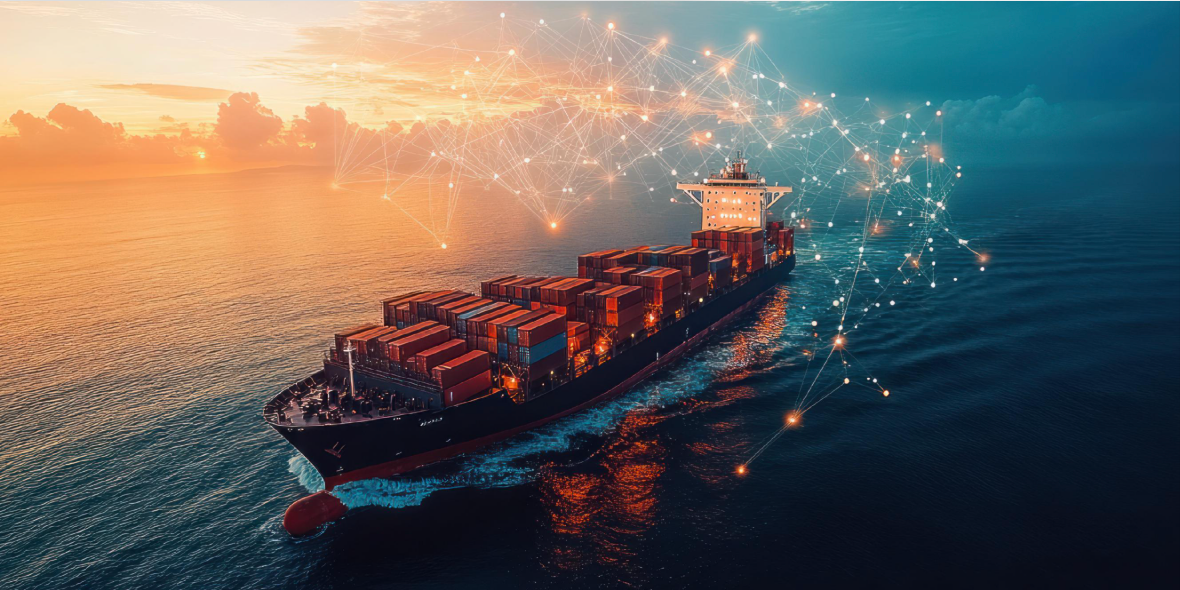
Explore how AI, maritime digitalisation, decarbonisation, automation and connected supply chains are transforming shipping, ports and vessel operations—and creating new opportunities for maritime innovation.
The maritime industry is entering a new era shaped by digitalisation, decarbonisation, artificial intelligence and connected supply chains. Ships, ports, fleet operators and maritime technology companies are rethinking how global trade operates in an increasingly data-driven and environmentally conscious world.
Shipping remains essential to global commerce, but traditional operational processes often rely on fragmented information, manual reporting, disconnected systems and limited real-time visibility. As regulatory requirements grow and operational efficiency becomes increasingly important, technology is creating new opportunities to transform maritime operations.
The future of maritime is not simply about introducing new technology. It is about connecting data, people, vessels and decisions to build shipping operations that are more efficient, resilient, sustainable and intelligent.
What Is Maritime Digitalisation?
Maritime digitalisation is the use of digital technologies, connected systems and data-driven processes to improve vessel operations, port management, shipping logistics, maritime safety and regulatory compliance.
It connects information that was previously managed through separate systems, documents, communication channels and manual workflows.
Digitalisation can support:
- Real-time vessel monitoring and operational visibility.
- Digital maritime compliance and emissions reporting.
- Automated document processing and data exchange.
- Fleet performance analysis.
- Port and shipping coordination.
- Predictive maintenance and operational planning.
- Improved communication between ships and shore teams.
The goal is to move from isolated digital tools towards connected maritime operations where reliable information can support decisions across the entire shipping ecosystem.
1. Digitalisation: Building a Connected Maritime Industry
Digital transformation is changing how shipowners, fleet managers, port operators and maritime service providers manage information and operations.
Connected vessel systems, cloud-based platforms, electronic documentation, IoT sensors and integrated maritime software are helping organisations move away from fragmented workflows.
Why digitalisation matters
Traditional maritime operations often involve information distributed across vessels, offices, agents, ports, spreadsheets and reporting systems.
When these systems cannot communicate effectively, teams face duplicate data entry, delayed updates, inconsistent records and limited operational visibility.
Digitalisation can help create a more connected environment by enabling:
- Centralised fleet data.
- Automated reporting workflows.
- Better vessel-to-shore communication.
- Digital document management.
- Real-time operational insights.
- Improved coordination between stakeholders.
The International Maritime Organization's maritime digitalisation strategy emphasises interoperability, standardisation, data-sharing and effective data governance—important foundations for a more connected maritime industry.
Digitalisation is therefore not just about replacing paper. It is about making maritime information useful, accessible and actionable.
2. Decarbonisation: The Transition Towards Sustainable Shipping
Decarbonisation is one of the most important transformations shaping the future of shipping.
The maritime industry is exploring ways to reduce greenhouse gas emissions, improve energy efficiency and transition towards cleaner fuels and technologies.
Key areas of maritime decarbonisation include:
- Alternative fuels such as methanol, ammonia and biofuels, where suitable.
- Energy-efficiency improvements.
- Optimised voyage planning and speed.
- Hull and propeller efficiency.
- Electrification and hybrid technologies where applicable.
- Emissions monitoring and carbon-intensity tracking.
- Digital tools for environmental compliance.
Regulatory frameworks such as EU MRV, EU ETS, FuelEU Maritime and IMO CII requirements are also increasing the importance of accurate vessel data and emissions reporting.
Decarbonisation is not a single technology or fuel solution. Different vessel types, routes, infrastructure availability and operating conditions will require different approaches.
The opportunity lies in combining operational improvements, emerging technologies, reliable data and long-term investment planning.
3. Artificial Intelligence and Automation in Shipping
Artificial intelligence is becoming an important technology for maritime operations because ships and shipping companies generate large volumes of operational data.
AI can help process information, identify patterns, detect anomalies and support faster decision-making.
Where AI can create value
Predictive maintenance: Analyse equipment performance and operating data to identify potential maintenance issues before they lead to unexpected failures.
Fuel and voyage optimisation: Evaluate operational patterns, route information, weather and fuel consumption to support more efficient voyage planning.
Automated compliance reporting: Extract information from documents, validate data, identify discrepancies and assist reporting workflows.
Emissions intelligence: Analyse fuel consumption, emissions and carbon-intensity trends to support environmental performance management.
Operational decision support: Bring information from multiple sources together to help fleet managers understand vessel performance and emerging issues.
Risk detection: Identify unusual patterns in operational data and prioritise issues requiring human investigation.
AI is most valuable when it solves a real operational problem. Predictive outputs should be transparent, grounded in reliable data and reviewed by qualified professionals—not treated as unquestionable decisions.
4. Smart Shipping: From Connected Vessels to Intelligent Operations
Smart shipping combines digital connectivity, automation, analytics, sensors and intelligent systems to improve how ships are operated and managed.
A smart shipping environment can connect onboard equipment, vessel systems, fleet-management platforms, shore-based teams and maritime service providers.
This can improve:
- Vessel performance visibility.
- Fuel-consumption monitoring.
- Maintenance planning.
- Voyage coordination.
- Operational safety.
- Environmental performance.
- Decision-making across fleets.
Smart shipping does not necessarily mean fully autonomous vessels. Many of its most valuable applications involve making conventional ships more connected, data-aware and efficient.
The long-term direction is towards systems that can provide better operational context, identify developing issues and support decisions without removing human accountability.
5. Supply Chain Innovation: Connecting Ships, Ports and Logistics
Shipping does not operate independently. It is part of a wider supply chain involving ports, terminals, cargo owners, freight forwarders, agents, logistics providers and inland transport networks.
Disconnected information across these stakeholders can lead to delays, uncertainty, repeated administrative work and inefficient coordination.
Digital supply chain innovation can improve this through:
- Electronic bills of lading.
- Digital port documentation.
- Maritime single-window systems.
- Connected logistics platforms.
- Cargo and vessel visibility.
- Data interoperability between stakeholders.
- Automated information exchange.
When vessels, ports and logistics networks share reliable information, stakeholders can coordinate more effectively and make better-informed operational decisions.
The future of maritime supply chains depends not only on digitising individual organisations but also on connecting systems across organisational boundaries.
6. Maritime Compliance Is Becoming Data-Driven
As maritime regulations evolve, compliance is increasingly connected to the quality, consistency and traceability of operational information.
Shipowners may need to coordinate fuel records, voyage data, emissions calculations, reporting documents and verification activities across multiple regulatory frameworks.
Manual processes make it difficult to maintain consistent information across a fleet.
A connected maritime compliance workflow can help teams:
- Collect operational data from different sources.
- Identify missing records.
- Validate fuel and voyage information.
- Reconcile discrepancies.
- Monitor reporting progress.
- Maintain supporting evidence.
- Prepare information for verification.
This creates an opportunity to move from reactive, deadline-driven reporting towards more continuous compliance monitoring.
For shipping companies, reliable data is becoming an operational asset—not just a reporting requirement.
7. The Biggest Challenges Facing Maritime Digital Transformation
Despite the opportunity, maritime digital transformation is not straightforward.
Legacy systems
Many ships and organisations still rely on systems that were not designed to integrate with modern digital platforms.
Fragmented data
Operational information may be stored in different formats, systems and departments, making standardisation difficult.
Cybersecurity
More connected ships, ports and information systems create a greater need for cyber risk management and secure digital infrastructure.
Adoption and training
Technology must work for people onboard and ashore. Complex tools that add workload without clear benefits may struggle to gain adoption.
Interoperability
Different maritime stakeholders use different platforms, standards and workflows. Connecting these systems remains a significant challenge.
Implementation costs
Modernisation requires investment, integration, training, maintenance and long-term planning.
The companies that succeed will not necessarily be those that adopt the most technology. They will be those that solve real problems, integrate into existing operations and deliver measurable value.
8. Opportunities for Maritime Technology Startups and Founders
The transformation of maritime operations creates opportunities for founders, technology companies and innovators.
Some of the most promising areas include:
| Innovation area | Opportunity |
|---|---|
| AI maritime analytics | Turn vessel data into actionable operational insights |
| Compliance automation | Simplify reporting, validation and verification preparation |
| Emissions intelligence | Track and analyse vessel environmental performance |
| Smart port technology | Improve port visibility, coordination and efficiency |
| Predictive maintenance | Identify equipment-performance issues earlier |
| Digital supply chains | Connect cargo, vessel, port and logistics data |
| Maritime cybersecurity | Protect increasingly connected maritime infrastructure |
| Vessel connectivity | Improve data exchange between onboard and shore-based systems |
| Energy optimisation | Support efficient fuel use and transition planning |
| Autonomous shipping | Develop technologies supporting remotely operated and autonomous vessels |
The biggest opportunity is not necessarily to digitise an existing process. It is to redesign how maritime work gets done by connecting information, reducing unnecessary manual effort and creating better decisions.
9. What Will Define the Future of Maritime?
The next generation of maritime operations will likely be shaped by five interconnected forces.
Connected data: Reliable data moving between vessels, ports, fleet managers and operational platforms.
Intelligent systems: AI and analytics supporting decisions, forecasts and exception detection.
Sustainable operations: Energy efficiency, cleaner fuels and emissions-aware operating strategies.
Automation: Reducing repetitive administrative and operational tasks.
Human-centred technology: Building tools that support seafarers, fleet teams and compliance professionals rather than adding unnecessary complexity.
These forces are interconnected. Digitalisation enables better analytics. Analytics can support efficiency. Efficiency can contribute to decarbonisation. Automation can reduce administrative burden. Better connectivity can improve collaboration.
The maritime transformation will therefore be driven by integrated solutions rather than isolated technology deployments.
How Sternbow Fits Into the Future of Maritime
Sternbow is focused on the intersection of maritime digitalisation, operational data and regulatory compliance.
Modern shipping companies need more than tools that produce reports at the end of a reporting period. They need workflows that help teams collect information, identify discrepancies, track exceptions, reconcile records and prepare reliable compliance data.
By connecting people, processes and technology, Sternbow supports a more structured approach to maritime compliance management.
As shipping moves towards more connected and data-driven operations, reliable compliance information can become part of the broader digital transformation—not a separate administrative burden.
Conclusion: Building a Smarter, More Sustainable Maritime Industry
The future of maritime will be shaped by how effectively the industry combines digitalisation, decarbonisation, artificial intelligence, automation and supply chain innovation.
Connected systems can improve visibility. AI can support analysis and forecasting. Digital workflows can reduce repetitive administrative tasks. Decarbonisation initiatives can drive more efficient operations. Better data sharing can connect vessels, ports and logistics networks.
The opportunity is bigger than technology adoption. It is about creating a maritime industry that operates more efficiently, makes better decisions, reduces avoidable complexity and adapts to changing environmental and operational demands.
For maritime technology founders, shipowners, fleet managers and operators, the next chapter is already taking shape.
The future of maritime belongs to solutions that make shipping more connected, intelligent, efficient and sustainable.
Sources
- IMO — Maritime Digitalisation Strategy
- IMO — Autonomous Ships and MASS Code
- European Maritime Safety Agency — Outlook 2026
- European Commission — Maritime Transport and Digitalisation
This article is intended for general informational purposes and discusses industry trends and technology opportunities. Regulatory and technology developments may change over time.
Frequently Asked Questions
Key regulatory and operational answers related to this analysis.